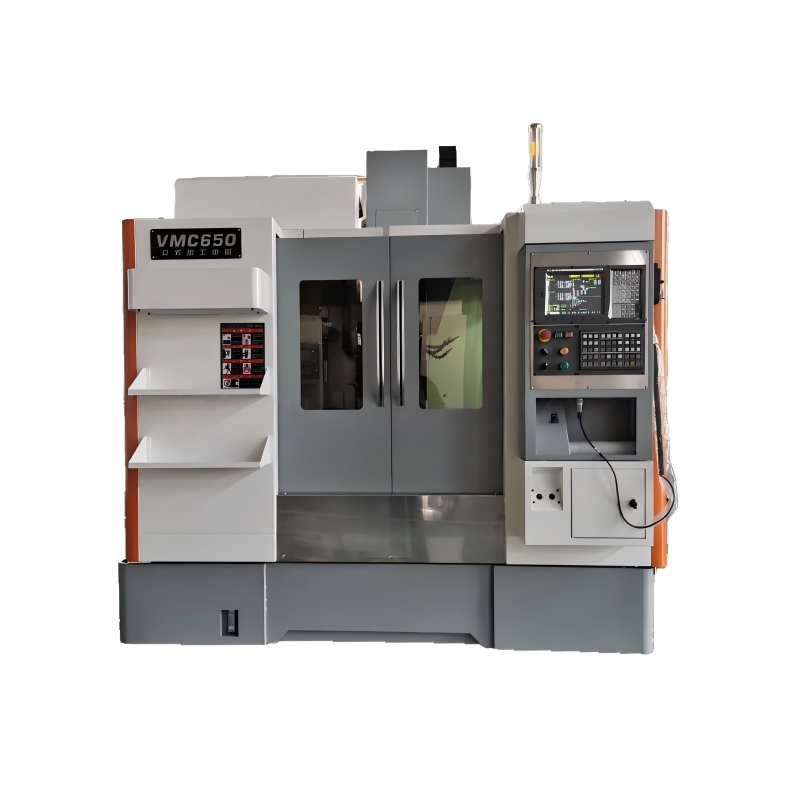
VMC (Vertical Machining Center) machines are integral to modern manufacturing, providing the precision and efficiency necessary for producing high-quality components. One of the key features that significantly enhances the performance of VMC machines is the Box Way system. This technical report delves into how the Box Way design contributes to the overall accuracy, stability, and durability of VMC machines, making them a preferred choice in various industrial applications.
The Box Way system, also known as a box guideway or box slide, is a type of linear motion guide used in machine tools. It consists of a rectangular cross-sectioned rail and a mating block, both made from high-strength materials such as cast iron or steel. The rail is typically integrated into the machine's structure, while the block is attached to the moving part of the machine, such as the table or the spindle head. The Box Way provides a robust and stable platform for the movement of these components, ensuring consistent and accurate positioning.
One of the primary advantages of the Box Way system is its ability to handle heavy loads and maintain high rigidity. This is crucial in VMC machines, where the cutting forces can be significant, and any deflection can lead to inaccuracies in the final product. The large contact area between the rail and the block distributes the load evenly, reducing wear and tear and extending the lifespan of the machine.
One of the most significant contributions of the Box Way to VMC machines is the enhancement of precision. The rigid construction of the Box Way ensures that the machine remains stable during operation, even when subjected to high cutting forces. This stability is critical for maintaining the tight tolerances required in many manufacturing processes.
Moreover, the Box Way system minimizes vibrations, which can be detrimental to the quality of the machined parts. Vibrations can cause tool chatter, leading to surface finish issues and dimensional inaccuracies. By reducing these vibrations, the Box Way helps to achieve smoother and more precise cuts, resulting in higher quality components.
Another factor that contributes to the precision of VMC machines with Box Ways is the alignment and parallelism of the guideways. The Box Way system allows for precise alignment, ensuring that the moving parts travel in a straight and true path. This alignment is essential for maintaining the accuracy of the machine over long periods and multiple operations.
The durability of VMC machines is another area where the Box Way system excels. The robust design of the Box Way, with its large contact surfaces, ensures that the machine can withstand the rigors of continuous use without significant wear. This is particularly important in high-volume production environments where downtime due to maintenance or repairs can be costly.
In addition to the material strength, the Box Way system often includes features such as lubrication channels and wipers to keep the guideways clean and well-lubricated. Proper lubrication reduces friction and wear, further extending the life of the machine. Regular maintenance, including cleaning and re-lubrication, can help to ensure that the Box Way continues to function optimally over time.
The longevity of the Box Way system also translates to lower maintenance costs and higher overall productivity. By reducing the frequency of repairs and replacements, manufacturers can achieve greater operational efficiency and reduce the total cost of ownership of their VMC machines.
Thermal stability is a critical factor in the performance of VMC machines, especially in environments where temperature fluctuations can occur. The Box Way system is designed to minimize thermal expansion and contraction, which can affect the accuracy of the machine. The materials used in the Box Way, such as cast iron, have low coefficients of thermal expansion, helping to maintain consistent dimensions and alignments.
Additionally, the Box Way system can be designed with cooling features, such as coolant channels, to further mitigate the effects of heat. These features help to dissipate heat generated during machining, ensuring that the machine remains within its optimal operating temperature range. This thermal stability is essential for achieving consistent and reliable performance, particularly in high-precision applications.
By maintaining thermal stability, the Box Way system helps to prevent dimensional changes that could lead to inaccuracies in the machined parts. This consistency is crucial for meeting the stringent quality requirements of many industries, including aerospace, automotive, and medical device manufacturing.
The Box Way system plays a pivotal role in enhancing the precision, stability, and durability of VMC machines. Its robust design, ability to handle heavy loads, and resistance to vibrations make it an ideal choice for high-precision machining. The durability and thermal stability of the Box Way also contribute to the long-term reliability and cost-effectiveness of VMC machines, making them a valuable asset in modern manufacturing.
As technology continues to advance, the Box Way system will likely see further improvements, further solidifying its position as a key component in the world of VMC machines. Manufacturers who invest in VMC machines with Box Ways can expect to benefit from enhanced performance, reduced maintenance, and increased productivity, ultimately leading to higher quality products and greater customer satisfaction.
 23/06/2026
IntroductionThe Box Way VMC (Vertical Machining Center) machine is a crucial piece of equipment in the manufacturing and machining industries, known for its precision, stability, and versatility. This comprehensive guide aims to provide an in-depth look i
Read More23/06/2026The advent of Box Way VMC (Vertical Machining Center) machines has revolutionized the manufacturing sector, offering a blend of precision, durability, and efficiency. This technical report delves into the specific advantages that Box Way technology brings
Read More23/06/2026The field of machining is constantly evolving, driven by the need for increased precision, efficiency, and productivity. One of the most significant advancements in this area is the integration of box way technology into Vertical Machining Centers (VMC).
Read More23/06/2026The advent of advanced manufacturing technologies has revolutionized the way products are designed, developed, and produced. Among these innovations, the Box Way VMC Machine stands out as a versatile tool that offers unparalleled precision, efficiency, an
Read More23/06/2026In today’s rapidly evolving manufacturing landscape, the integration of high-precision machinery and cutting-edge technologies is paramount for businesses aiming to stay ahead. This report delves into how maximizing productivity can be achieved with an SG
Read More22/06/2026The CK6136 is a versatile CNC lathe machine that has been designed to meet the rigorous demands of modern manufacturing. Its advanced features, including a Box Way VMC Machine design, make it an ideal choice for a wide range of applications. In this in-de
Read More22/06/2026In the realm of precision machining, advancements in technology have continuously pushed the boundaries of what is possible. One such innovation that has garnered significant attention is the Box Way VMC Machine, a tool that represents a leap forward in h
Read More22/06/2026Introduction to Box Way VMC MachinesThe evolution of manufacturing technologies has led to the development of advanced machining solutions, among which the Box Way VMC (Vertical Machining Center) Machine stands out. This type of machine is designed for pr
Read More22/06/2026In the realm of precision machining, selecting the right machinery is crucial for achieving high-quality results. The CK6136, a versatile and reliable machine, stands out as an excellent choice for various applications. This report aims to explore the adv
Read More22/06/2026In the world of machining, precision and efficiency are paramount. One critical aspect that significantly impacts these factors in Vertical Machining Centers (VMCs) is the design of their linear motion systems. Among various options, the box way design ha
Read More22/06/2026In the rapidly evolving landscape of manufacturing technology, the integration of Box Way VMC Machine innovations is setting a new standard for precision, efficiency, and durability. This report delves into the future of VMC (Vertical Machining Center) te
Read More22/06/2026The manufacturing industry has witnessed significant advancements in technology, with Vertical Machining Centers (VMCs) playing a crucial role. One of the key components that influence the performance and longevity of VMCs is the Box Way. This technical r
Read More22/06/2026Understanding the Basics of Box Way VMC MachinesThe foundation of any machining process lies in the stability and precision of its components. In vertical machining centers (VMCs), one critical component is the box way, which plays a pivotal role in ensur
Read More21/06/2026The evolution of machining technology has seen significant advancements over the years, with manufacturers constantly seeking more efficient and precise methods to produce components. One such advancement is the use of Box Way VMC (Vertical Machining Cent
Read More21/06/2026In the realm of precision manufacturing, Vertical Machining Centers (VMCs) play a pivotal role. Among the various designs, the Box Way VMC Machine stands out for its robustness and accuracy. This technical report delves into the intricacies of the Box Way
Read More21/06/2026The Evolution and Importance of Box Way Technology in VMC MachinesBox way technology, a critical component in the design and operation of Vertical Machining Centers (VMCs), has undergone significant advancements over the years. The integration of box ways
Read More21/06/2026The integration of Box Way technology into Vertical Machining Centers (VMC) has revolutionized the manufacturing industry, providing enhanced stability, accuracy, and longevity. This comprehensive guide delves into the specifics of Box Way VMC Machine app
Read More20/06/2026The evolution of manufacturing technologies has seen significant advancements, with Vertical Machining Centers (VMCs) playing a crucial role in the precision and efficiency of modern machining processes. Among the many components that contribute to the pe
Read More20/06/2026In the realm of precision machining, Vertical Machining Centers (VMCs) play a crucial role in achieving high accuracy and efficiency. One of the key components that significantly influence the performance of VMCs is the type of way system used. This repor
Read More20/06/2026Understanding the Box Way VMC Machine: A Foundation for PrecisionThe Box Way VMC Machine represents a significant advancement in vertical machining center (VMC) technology, offering unparalleled precision and durability. This section explores the fundamen
Read More20/06/2026The evolution of manufacturing technologies has been significantly influenced by advancements in machine tool design. One such innovation is the development and optimization of Box Way VMC (Vertical Machining Center) machines, which have become increasing
Read More19/06/2026The evolution of manufacturing technology has been marked by significant advancements in precision, efficiency, and durability. One such advancement is the Box Way VMC (Vertical Machining Center) machine, which has become a cornerstone in modern machining
Read More19/06/2026In the realm of precision machining, the integration of advanced box way technology into VMC (Vertical Machining Center) machines has marked a significant leap in performance and reliability. This report delves into the core benefits and technical advance
Read More19/06/2026The Fundamental Principles of Box Way Design in VMCBox way systems, integral to the construction of Vertical Machining Centers (VMC), play a crucial role in enhancing both the reliability and efficiency of these machines. The design principles behind box
Read More19/06/2026In the realm of precision manufacturing, the Box Way VMC (Vertical Machining Center) stands out as a pinnacle of engineering excellence. This article delves into how the Box Way design significantly enhances the accuracy and efficiency of VMC machines, ma
Read More18/06/2026The advent of advanced manufacturing technologies has significantly transformed the landscape of industrial production, with the Box Way VMC (Vertical Machining Center) Machine standing out as a prime example. This piece of machinery represents more than
Read More18/06/2026Understanding the Core Components of a Box Way VMC MachineThe Box Way Vertical Machining Center (VMC) is a cornerstone in modern manufacturing, known for its robust construction and precision. At the heart of these machines lies the box way design, which
Read More18/06/2026In the realm of modern manufacturing, the Vertical Machining Center (VMC) stands out as a cornerstone for precision and efficiency. Among the various components that make up these sophisticated machines, the box way system has been a subject of continuous
Read More18/06/2026Box Way VMC Machine, a term that has been gaining significant attention in the machining industry, represents an innovative approach to improving the performance and longevity of Vertical Machining Centers (VMCs). This technology focuses on the use of box
Read MoreOur professional sales team is always ready to assist you.