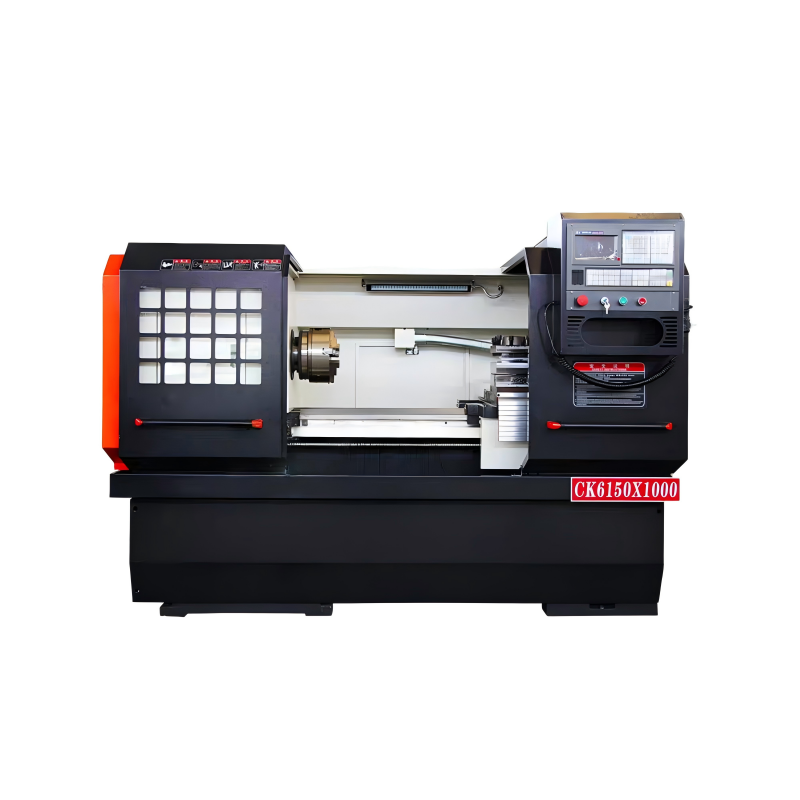
In the realm of precision machining, CNC lathes play a pivotal role in producing high-quality components. The performance and accuracy of these machines are significantly influenced by their design and construction. One critical aspect that enhances the performance of a CNC Lathe is the use of hard rails. This report delves into the role of hard rails in enhancing the performance of Turning Hard Rail CNC Lathe, exploring their benefits, applications, and the technological advancements that have made them indispensable in modern manufacturing.
Enhanced Rigidity and Stability
Hard rails, also known as box ways or linear guides, are designed to provide superior rigidity and stability to CNC lathes. These rails are typically made from hardened steel and are machined to extremely tight tolerances. The high rigidity of hard rails ensures that the machine tool can maintain its accuracy even under heavy cutting loads. This is particularly important in turning operations where the workpiece is subjected to significant forces during the cutting process. The enhanced rigidity of hard rails minimizes deflection and vibration, resulting in higher precision and better surface finish on the machined parts.
Moreover, the stability provided by hard rails allows for consistent and repeatable machining results. This is crucial in industries such as aerospace, automotive, and medical, where precision and consistency are paramount. The ability to maintain tight tolerances over extended periods of operation is a key advantage of using hard rails in CNC lathes.
Improved Load Capacity and Durability
Another significant benefit of hard rails is their improved load capacity and durability. Hard rails are capable of supporting heavier workpieces and tools compared to softer rail systems. This is particularly beneficial in applications where large and heavy components need to be machined. The increased load capacity of hard rails ensures that the CNC lathe can handle a wide range of materials and part sizes without compromising on performance.
Additionally, hard rails are more resistant to wear and tear, which translates to longer service life and reduced maintenance costs. The hardened steel used in the construction of hard rails is highly durable and can withstand the abrasive effects of chips and coolant over time. This durability is especially important in high-volume production environments where downtime for maintenance can be costly. By reducing the frequency of maintenance, hard rails contribute to the overall efficiency and productivity of the CNC lathe.
Increased Precision and Accuracy
Precision and accuracy are critical factors in CNC machining, and hard rails play a vital role in achieving these. The precise machining of hard rails ensures that the sliding surfaces are smooth and flat, which minimizes friction and wear. This, in turn, leads to smoother and more accurate movement of the machine's axes. The reduced friction also means that the servo motors can operate more efficiently, providing better control and responsiveness.
Furthermore, the use of hard rails in CNC lathes allows for the implementation of advanced feedback systems, such as linear encoders. These encoders provide real-time position data, enabling the CNC controller to make precise adjustments to the machine's movements. This level of control is essential for achieving the tight tolerances required in high-precision machining. The combination of rigid hard rails and advanced feedback systems results in a CNC lathe that can produce parts with exceptional accuracy and repeatability.
Advanced Lubrication Systems
To further enhance the performance of hard rails, modern CNC lathes often incorporate advanced lubrication systems. These systems ensure that the sliding surfaces of the hard rails are continuously lubricated, reducing friction and wear. Proper lubrication is crucial for maintaining the longevity and performance of the hard rails. Advanced lubrication systems can include features such as automatic oilers, centralized lubrication units, and even air-oil systems that deliver a fine mist of lubricant to the rails.
These lubrication systems not only extend the life of the hard rails but also improve the overall performance of the CNC lathe. By reducing friction, they enable smoother and more efficient movement of the machine's axes, leading to better surface finish and higher precision. Additionally, the use of advanced lubrication systems can help in maintaining a clean and controlled environment within the machine, which is essential for achieving high-quality machining results.
Conclusion
The use of hard rails in CNC lathes has a profound impact on their performance, precision, and durability. The enhanced rigidity and stability provided by hard rails ensure that the machine can maintain its accuracy under heavy cutting loads, while the improved load capacity and durability allow for the handling of larger and heavier workpieces. The increased precision and accuracy achieved through the use of hard rails, combined with advanced feedback systems, result in a CNC lathe that can produce parts with exceptional quality and repeatability. Finally, the integration of advanced lubrication systems further enhances the performance and longevity of the hard rails, making them an indispensable component in modern CNC lathes.
 04/06/2026